local
Invasive jellyfish washing up on Texas coast poses threat to local marine ecosystems
By Julianna Washburn, Galveston County Bureau Houston Public Media (NPR/PBS)
· July 13, 2026
· 1 min read
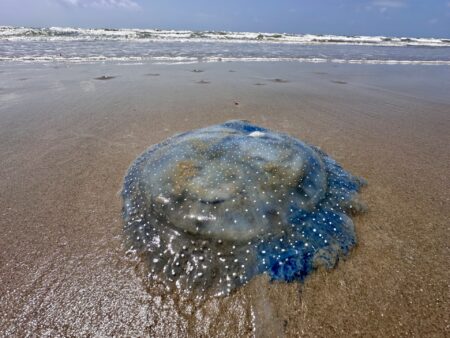
Research shows the Australian white-spotted jellyfish is considered invasive because it preys on native species, like plankton. It can also negatively impact the shrimp industry by clogging nets and damaging fishing equipment.
Key takeaway It can also negatively impact the shrimp industry by clogging nets and damaging fishing equipment.
Why this matters in The Piney Point
The presence of Australian white-spotted jellyfish in Texas coastal waters has significant implications for Piney Point Village residents who rely on the marine ecosystem for recreation and livelihood. The jellyfish's impact on native plankton populations can have a ripple effect throughout the food chain, potentially altering the balance of the ecosystem. For local fishermen and shrimpers, the invasive species poses a direct economic threat, as clogged nets and damaged equipment can lead to financial losses. As the situation in Piney Point Village unfolds, it will be crucial to monitor the jellyfish population and assess the effectiveness of any measures taken to mitigate its effects on the local marine environment and industries that depend on it. The village's proximity to Houston, a major hub for the seafood industry, adds another layer of complexity to the issue, as the economic repercussions of the invasive jellyfish could be felt beyond the local community.
About this story
Original reporting by Houston Public Media (NPR/PBS) . The Piney Point surfaces reporting from trusted publishers and adds local editorial context so readers can quickly understand what a story means for their community. We attribute every source, link to the original report, and follow a documented editorial standards policy. To understand how stories are selected and reviewed, read our about page .
For the complete original report, visit Houston Public Media (NPR/PBS) . Have a tip or correction? Contact our newsroom .
Category: local Published: July 13, 2026 Source: Houston Public Media (NPR/PBS) Reading time: 1 min
Get more The Piney Point stories like this
Free weekly briefing covering local and other local news. Curated by our editorial team. No spam.
By subscribing you agree to our privacy policy . Unsubscribe anytime.
Frequently asked about this story
What is this story about? Research shows the Australian white-spotted jellyfish is considered invasive because it preys on native species, like plankton. It can also negatively impact the shrimp industry by clogging nets and damaging fishing equipment.
When was this published? This article was first published on July 13, 2026 by Houston Public Media (NPR/PBS) and curated for The Piney Point readers.
Who reported this story? This story was reported by Julianna Washburn, Galveston County Bureau at Houston Public Media (NPR/PBS). To learn more about how The Piney Point selects and reviews stories, see our editorial standards .
Where can I find related coverage? See more local coverage from The Piney Point, or browse our daily briefing and topic hubs .
← Back to all news
More local →
Today’s briefing
Subscribe to newsletter